
Top 12 Kids Room Design Ideas
A child’s room is much more than just a place to sleep. It is a personal space where children play, learn, imagine, create memories, and develop their personality. A thoughtfully designed kids room can encourage creativity, improve organization, support learning, and provide a comfortable environment where children feel happy and secure.
Modern parents are increasingly looking for kids room design ideas that balance beauty with functionality. Instead of simply decorating with colorful furniture and toys, today’s children’s rooms focus on smart layouts, comfortable furniture, creative storage solutions, safe materials, and designs that can grow with the child.
The perfect kids room combines imagination with practicality. A playful theme can make the room exciting, while ergonomic furniture and organized storage help children develop good habits. From magical fairy-tale bedrooms and adventurous spaces to minimalist Scandinavian-inspired rooms, there are endless possibilities to create a unique environment.
Choosing the right colors, furniture, lighting, and décor is essential because a child’s surroundings can influence mood, creativity, and comfort. Soft colors can create a relaxing atmosphere, while vibrant accents can add energy and inspiration. Functional furniture such as bunk beds, study desks, storage cabinets, and modular shelves can help maximize space, especially in smaller bedrooms.
Safety is another important factor in kids room design. Rounded furniture edges, non-toxic paints, secure storage systems, and child-friendly materials should always be considered when planning the room. A beautiful room should also be practical, easy to maintain, and adaptable as children grow.
In this complete guide, we will explore the Top 12 kids room design ideas that combine creativity, comfort, and modern interior trends. Each idea includes design inspiration, color recommendations, furniture suggestions, budget-friendly tips, expert advice, common mistakes, maintenance guidance, and practical examples to help you create a dream bedroom for your child.
1. Modern Minimalist Kids Room Design
Overview
Minimalist kids room design focuses on simplicity, organization, and functionality. Instead of overcrowding the room with excessive decorations and furniture, this style creates a clean environment where children can play freely and stay organized.
A minimalist children’s bedroom does not mean boring. The key is combining neutral backgrounds with playful elements such as colorful artwork, soft toys, creative shelves, and personalized décor.
Benefits
- Creates a calm atmosphere
- Makes small rooms appear larger
- Reduces visual clutter
- Easier cleaning and maintenance
- Encourages organization
- Timeless design that grows with children
Best Colors
- White
- Beige
- Soft Gray
- Light Blue
- Pastel Green
- Warm Wood tones
Best Materials
- Natural wood furniture
- Cotton fabrics
- Soft rugs
- Bamboo storage baskets
- Child-safe paint
- Rounded-edge furniture
Styling Ideas
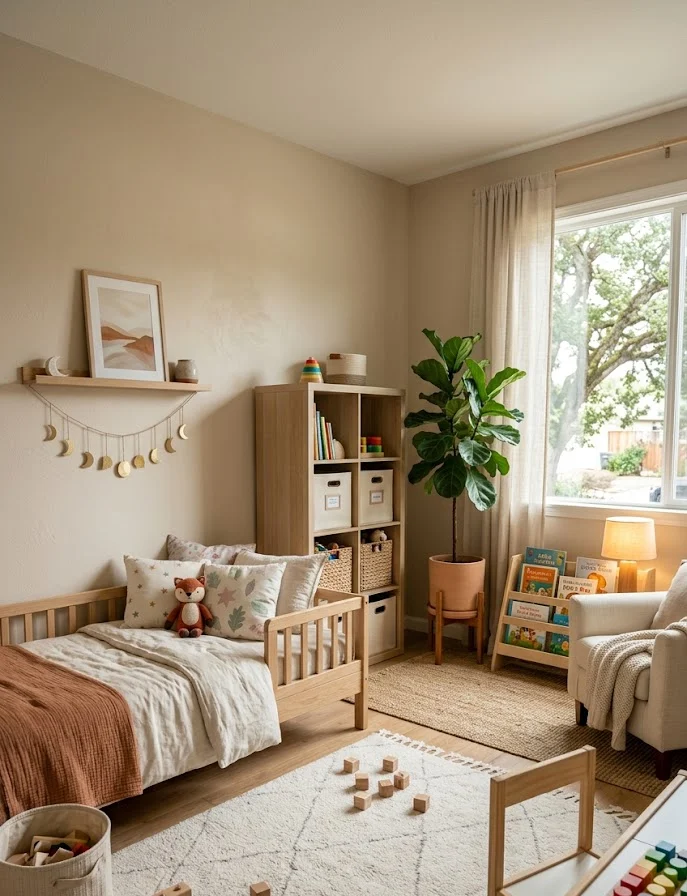
Choose a simple bed frame, functional storage cabinets, floating shelves, and a compact study area. Add personality through wall art, colorful cushions, themed bedding, and favorite toys displayed neatly.
A neutral wall color allows parents to update decorations easily as the child’s interests change.
Budget Tips
You do not need expensive furniture to create a minimalist kids room. Use multifunctional furniture, affordable storage boxes, DIY wall décor, and simple bedding designs.
Expert Recommendations
Interior designers suggest investing in quality basics such as a comfortable mattress, durable storage, and ergonomic furniture because children use these items daily.
Mistakes to Avoid
- Making the room too plain
- Removing all playful elements
- Choosing furniture without storage
- Ignoring the child’s personality
- Using uncomfortable furniture
Maintenance
Keep surfaces clear, organize toys weekly, clean fabrics regularly, and involve children in maintaining their own space.
Best For
- Small bedrooms
- Modern homes
- Shared kids rooms
- Parents who prefer clean interiors
Practical Example
A child’s bedroom with white walls, a wooden bed, open shelves, soft beige curtains, colorful books, and a small play corner creates a peaceful yet playful environment.
Current Trends
- Neutral nursery designs
- Wooden Montessori furniture
- Hidden storage
- Open shelving
- Natural textures
2. Adventure-Themed Kids Room Design
Overview
Adventure-themed bedrooms transform ordinary spaces into exciting worlds where children can explore their imagination. This design style is perfect for kids who love travel, nature, animals, superheroes, exploration, or outdoor adventures.
A well-designed adventure room encourages creativity and storytelling while creating a unique personal space.
Benefits
- Encourages imagination
- Creates a fun environment
- Reflects the child’s interests
- Makes bedtime more enjoyable
- Provides a personalized space
Best Colors
- Forest Green
- Sky Blue
- Earth Brown
- Sand Beige
- Navy Blue
- Orange accents
Best Materials
- Wooden furniture
- Canvas fabrics
- Natural fiber rugs
- Adventure-themed wallpapers
- Rope details
- Durable textiles
Styling Ideas
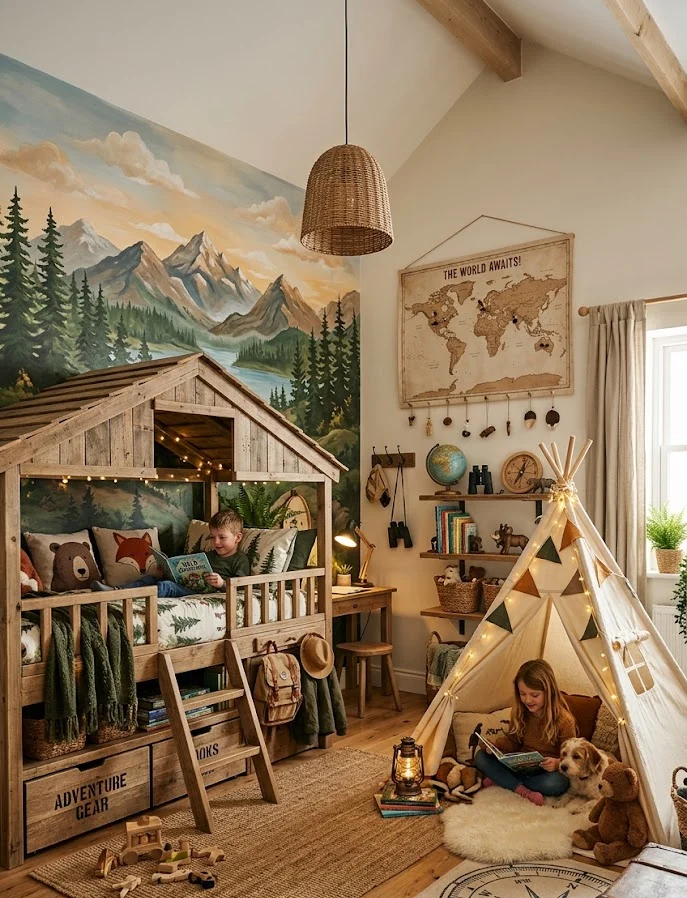
Add world maps, mountain murals, tent-style reading corners, explorer-themed accessories, animal artwork, and wooden storage boxes.
A bunk bed designed like a cabin or a treehouse-inspired sleeping area can become the main attraction of the room.
Budget Tips
Instead of a complete themed renovation, use removable wallpaper, themed bedding, posters, and affordable accessories to create an adventurous atmosphere.
Expert Recommendations
Choose flexible themes that can adapt as children grow. Avoid designs based on very specific characters that may quickly lose popularity.
Mistakes to Avoid
- Overloading the room with decorations
- Choosing expensive permanent themes
- Ignoring storage needs
- Using unsafe climbing features
Maintenance
Clean themed wallpapers carefully, wash bedding regularly, and check decorative elements for safety.
Best For
- Creative children
- Nature lovers
- Travel-inspired bedrooms
- Active kids
Practical Example
A child’s room featuring a mountain wallpaper mural, wooden furniture, camping-style reading tent, globe decoration, and adventure books creates an inspiring explorer’s space.
Current Trends
- Jungle themes
- Space exploration rooms
- Camping-inspired décor
- Nature-inspired designs
- Travel themes
3. Scandinavian Kids Room Design
Overview
Scandinavian kids room design combines simplicity, comfort, and functionality. Inspired by Nordic interiors, this style focuses on natural materials, soft colors, cozy textures, and practical furniture.
It creates a peaceful environment where children can relax, play, and learn.
Benefits
- Creates a calming atmosphere
- Works well in small spaces
- Uses timeless design elements
- Easy to update over time
- Encourages organization
Best Colors
- White
- Light Gray
- Soft Beige
- Pastel Pink
- Pale Blue
- Natural Wood
Best Materials
- Oak wood
- Cotton textiles
- Wool rugs
- Linen curtains
- Natural baskets
- Eco-friendly paints
Styling Ideas
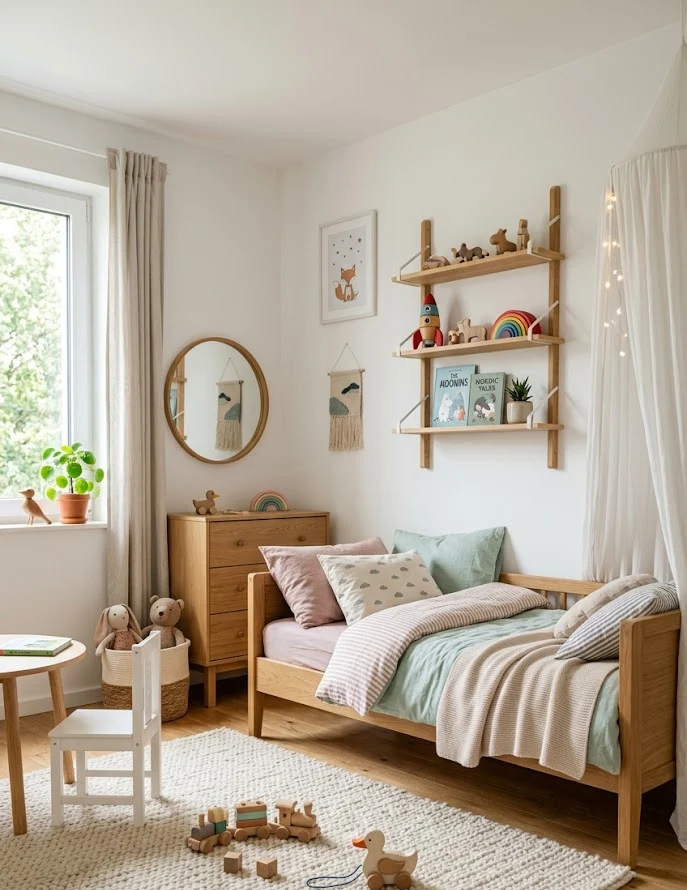
Use wooden beds, soft blankets, woven baskets, simple artwork, cozy reading corners, and open shelves displaying books and toys.
Add warm lighting through lamps and fairy lights to make the room feel comfortable.
Budget Tips
Affordable wooden furniture, neutral bedding, and handmade décor pieces can easily create a Scandinavian-inspired look without a large investment.
Expert Recommendations
Focus on functionality first. Every piece of furniture should serve a purpose and support the child’s daily activities.
Mistakes to Avoid
- Using too many colors
- Overdecorating walls
- Choosing impractical furniture
- Ignoring storage solutions
Maintenance
Wash fabric items regularly, organize shelves frequently, and maintain wooden furniture with proper cleaning products.
Best For
- Toddlers
- Young children
- Minimalist homes
- Small bedrooms
Practical Example
A Scandinavian kids room with a white wooden bed, soft gray rug, oak shelves, pastel artwork, and cozy blankets creates a warm and inviting atmosphere.
Current Trends
- Montessori-inspired furniture
- Neutral nursery colors
- Natural wood toys
- Cozy reading spaces
- Sustainable décor
4. Colorful Creative Kids Room Design
Overview
A colorful kids room design creates a cheerful and energetic environment that encourages creativity and imagination. Bright colors, playful patterns, and artistic decorations can transform a simple bedroom into an inspiring space.
The key is creating balance. Too many colors can feel overwhelming, while carefully selected shades create a joyful atmosphere.
Benefits
- Stimulates creativity
- Creates a fun environment
- Makes the room feel lively
- Reflects child personality
- Encourages learning and play
Best Colors
- Yellow
- Blue
- Green
- Coral
- Pink
- Purple accents
Best Materials
- Colorful textiles
- Painted furniture
- Soft carpets
- Washable wall coverings
- Wooden accessories
Styling Ideas
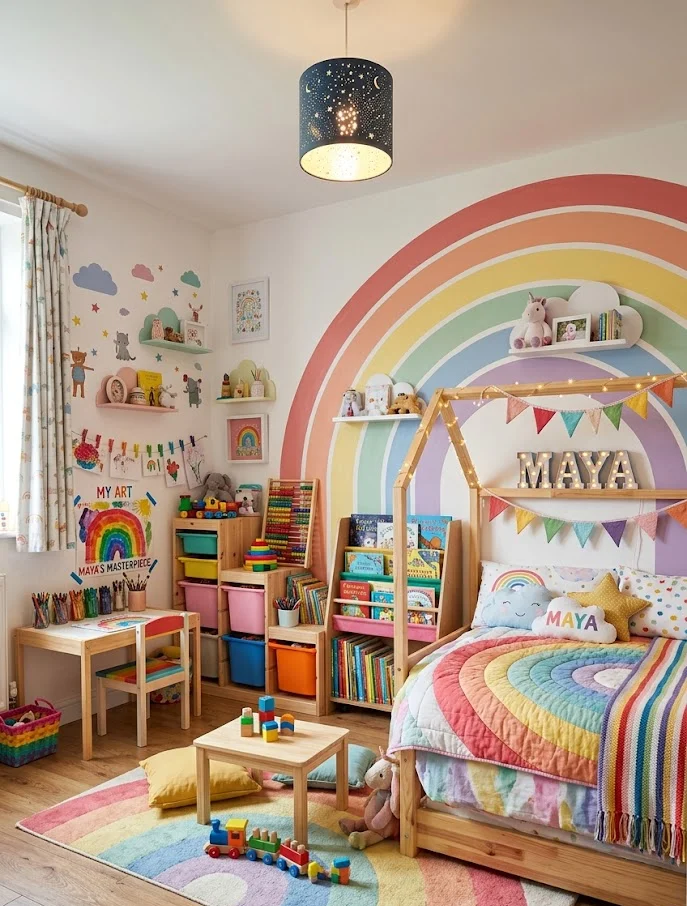
Create an art wall, add colorful storage boxes, use patterned bedding, install playful lighting, and include a dedicated drawing or craft area.
Budget Tips
Paint one accent wall instead of the entire room, use removable stickers, and add affordable colorful accessories.
Expert Recommendations
Use colors strategically. Bright shades work best as accents rather than covering every surface.
Mistakes to Avoid
- Using too many competing colors
- Ignoring calming areas
- Choosing difficult-to-clean materials
- Forgetting storage
Maintenance
Choose washable fabrics, clean painted surfaces regularly, and organize colorful toys in labeled containers.
Best For
- Creative children
- Art lovers
- Play-focused bedrooms
- Preschool rooms
Practical Example
A child’s room with a rainbow accent wall, colorful shelves, creative desk area, bright cushions, and playful artwork creates an exciting learning environment.
Current Trends
- Rainbow themes
- Geometric walls
- Creative corners
- Personalized artwork
- Interactive walls
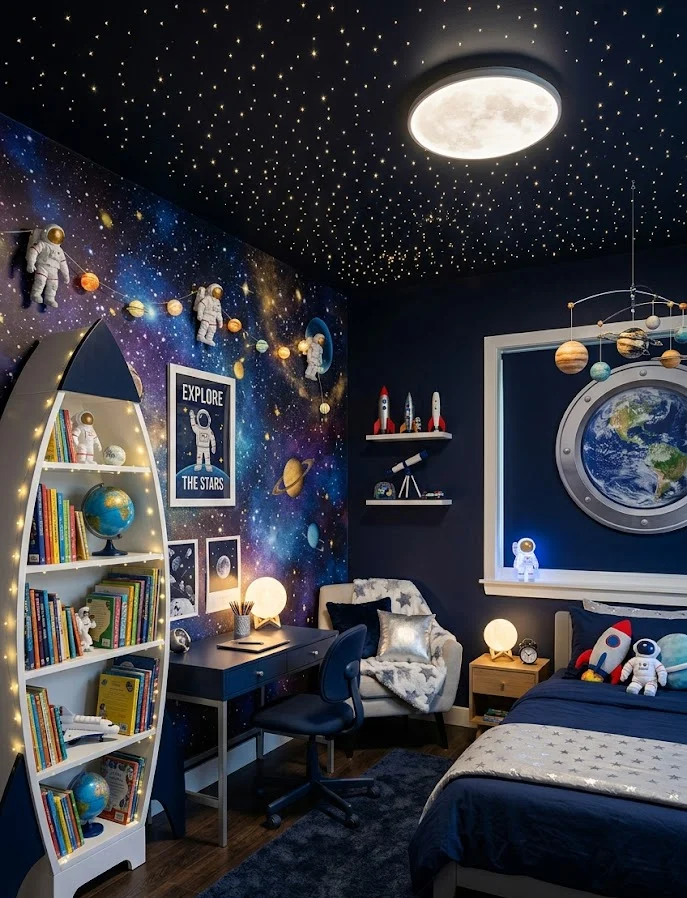
5. Space-Themed Kids Room Design
Overview
A space-themed kids room is a perfect choice for children who are fascinated by planets, stars, astronauts, and the mysteries of the universe. This design transforms a bedroom into an exciting galaxy where imagination and learning come together.
Space-inspired interiors can range from subtle designs with star decorations to fully immersive rooms featuring galaxy ceilings, rocket-shaped furniture, and planet murals.
Benefits
- Encourages curiosity and learning
- Inspires imagination
- Creates a unique personal space
- Makes bedtime exciting
- Supports interest in science and exploration
Best Colors
- Navy Blue
- Deep Purple
- Black
- Silver
- White
- Metallic Gray
Best Materials
- Glow-in-the-dark stickers
- Matte wall paint
- Wooden furniture
- Soft fabric bedding
- Acrylic decorations
- LED lighting
Styling Ideas
Create a galaxy-inspired feature wall, add planet artwork, install star-shaped ceiling lights, use astronaut-themed bedding, and include a telescope corner for children interested in astronomy.
A rocket-shaped bookshelf or moon-shaped night lamp can become a fun focal point.
Budget Tips
You do not need expensive custom furniture. Affordable galaxy wallpaper, LED star lights, posters, and themed bedding can create a magical space atmosphere.
Expert Recommendations
Keep the main furniture neutral so the room can easily transition as the child grows. Replaceable décor is better than permanent themed furniture.
Mistakes to Avoid
- Making the room too dark
- Using too many themed decorations
- Ignoring study space
- Choosing low-quality lighting
- Creating a theme that cannot adapt
Maintenance
Clean LED lights carefully, remove dust from decorative items, and update accessories as children’s interests change.
Best For
- Science-loving children
- Space enthusiasts
- Curious learners
- Boys and girls of all ages
Practical Example
A bedroom with a dark blue galaxy wall, white furniture, astronaut artwork, star ceiling lights, and a small reading corner creates an inspiring environment for young explorers.
Current Trends
- Galaxy ceilings
- Astronaut murals
- Smart LED lighting
- Planet decorations
- STEM-inspired rooms
6. Montessori-Inspired Kids Room Design
Overview
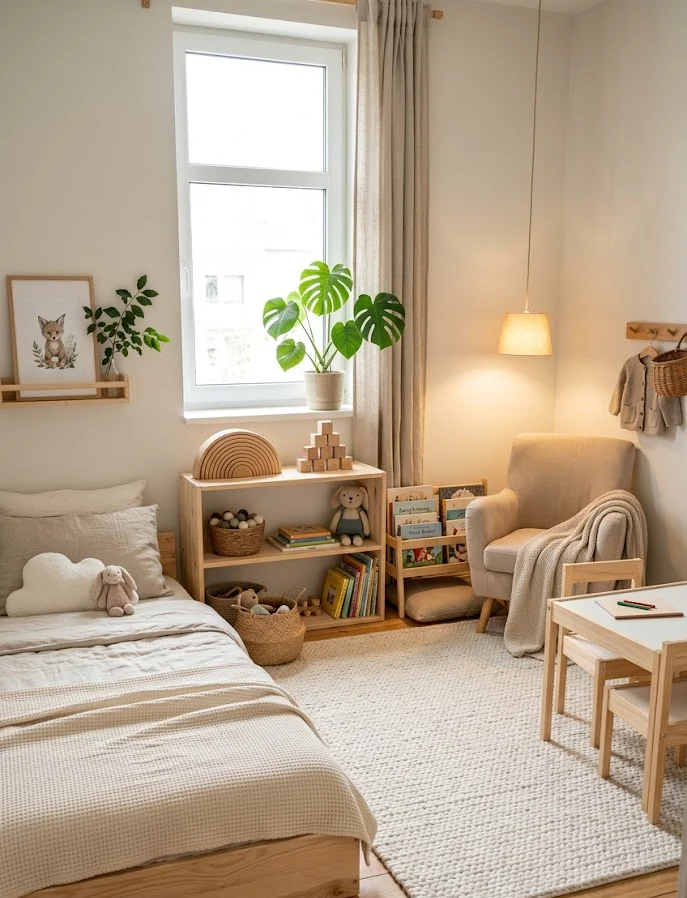
Montessori-inspired kids rooms focus on independence, accessibility, and child-friendly organization. Based on Montessori principles, these spaces are designed so children can safely explore, choose activities, and manage their belongings independently.
The design avoids unnecessary clutter and encourages children to participate in keeping their room organized.
Benefits
- Encourages independence
- Builds responsibility
- Improves organization skills
- Creates a safe environment
- Supports child development
Best Colors
- Soft Beige
- White
- Natural Green
- Pastel Blue
- Warm Gray
- Earth Tones
Best Materials
- Natural wood
- Cotton fabrics
- Bamboo storage
- Non-toxic paints
- Wool rugs
- Handmade toys
Styling Ideas
Use low-level bookshelves, floor beds, accessible toy baskets, child-sized tables, and open storage where children can easily reach their belongings.
Keep toys limited and rotate them regularly to maintain interest.
Budget Tips
Create a Montessori-style room using affordable low shelves, baskets, floor cushions, and simple wooden toys.
Expert Recommendations
Design the room from the child’s perspective. Furniture height and accessibility are more important than decorative elements.
Mistakes to Avoid
- Adding too many toys
- Using unreachable storage
- Choosing unsafe furniture
- Creating excessive decoration
- Ignoring child movement space
Maintenance
Teach children simple organization habits, rotate toys monthly, and keep storage areas clearly arranged.
Best For
- Toddlers
- Preschool children
- Parents interested in child development
- Small bedrooms
Practical Example
A Montessori bedroom includes a low wooden bed, accessible bookshelves, natural toys, soft floor mats, and simple artwork, allowing children to explore independently.
Current Trends
- Floor beds
- Open toy shelves
- Natural materials
- Child-sized furniture
- Minimal toy organization
7. Shared Kids Room Design for Siblings
Overview
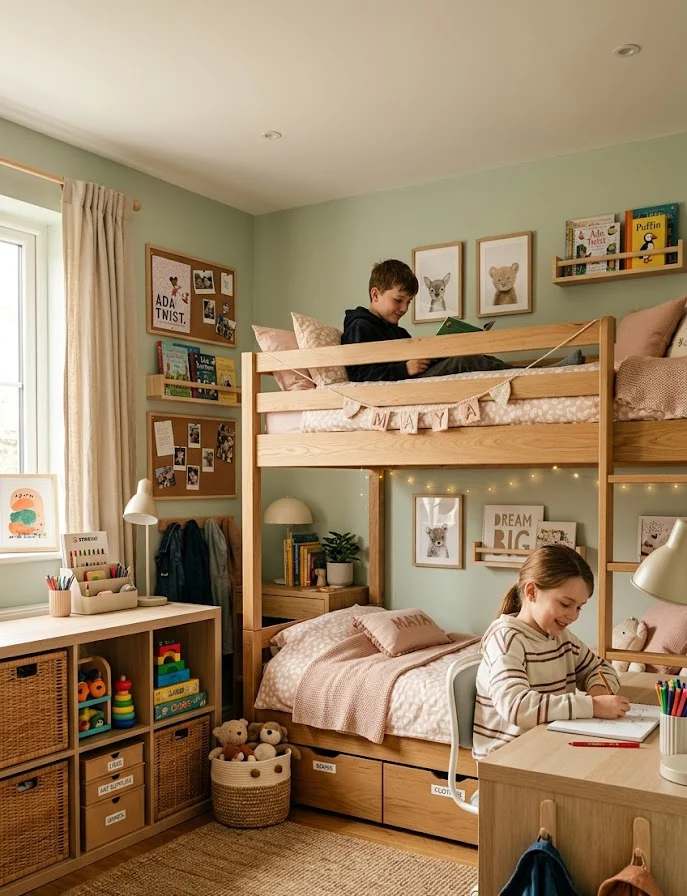
Designing a shared bedroom for siblings requires careful planning to balance personal space, storage, and comfort. A well-designed shared kids room should allow each child to express their personality while maintaining a cohesive overall style.
Smart layouts and multifunctional furniture are essential for making shared rooms practical.
Benefits
- Saves space
- Encourages bonding
- Teaches sharing
- Creates organized storage
- Maximizes bedroom functionality
Best Colors
- Soft Neutral Colors
- Pastel Shades
- Blue and Green combinations
- Beige
- White
Best Materials
- Bunk beds
- Solid wood furniture
- Modular storage
- Durable fabrics
- Washable rugs
Styling Ideas
Use bunk beds, twin beds with matching designs, individual storage areas, personalized name signs, and separate study zones.
For different personalities, create shared themes with customized accessories for each child.
Budget Tips
Bunk beds and multifunctional furniture provide excellent value by maximizing floor space.
Expert Recommendations
Give each child a personal area, even if small. A separate shelf, drawer, or wall section helps children feel ownership.
Mistakes to Avoid
- Unequal storage space
- Ignoring privacy
- Overcrowding furniture
- Choosing age-inappropriate designs
- Poor lighting
Maintenance
Label storage areas, organize toys by category, and regularly adjust furniture as children grow.
Best For
- Families with multiple children
- Apartments
- Small homes
- Sibling bedrooms
Practical Example
A shared bedroom with a wooden bunk bed, separate study desks, individual storage baskets, and coordinated bedding creates a comfortable space for two children.
Current Trends
- Custom bunk beds
- Curtain privacy spaces
- Modular furniture
- Personalized décor
- Multi-use storage
8. Luxury Kids Room Design
Overview
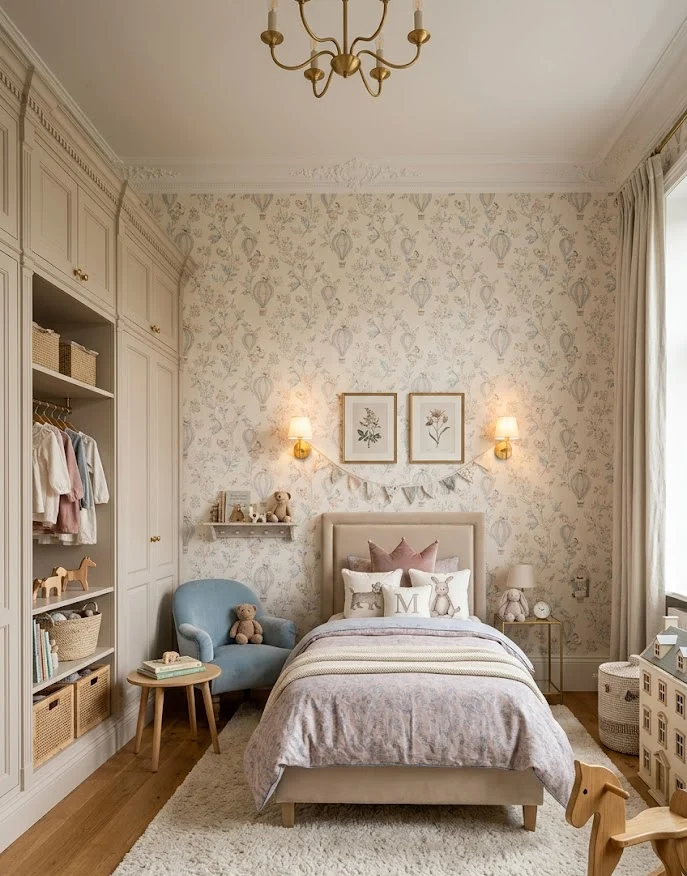
A luxury kids room combines elegance, comfort, and functionality to create a premium environment for children. Unlike adult luxury interiors, children’s luxury bedrooms should still feel playful, safe, and welcoming.
The goal is to use high-quality materials, thoughtful design details, and personalized elements without making the room feel too formal.
Benefits
- Creates a comfortable environment
- Adds long-term value
- Provides premium storage solutions
- Enhances visual appeal
- Offers better durability
Best Colors
- Soft Gold
- Cream
- Blush Pink
- Navy Blue
- Emerald Green
- Champagne Beige
Best Materials
- Premium wood furniture
- Velvet fabrics
- Custom cabinetry
- High-quality carpets
- Brass details
- Designer lighting
Styling Ideas
Include custom wardrobes, elegant wallpaper, upholstered beds, statement lighting, luxury rugs, and personalized artwork.
A reading corner with a comfortable chair and decorative shelves can add both beauty and function.
Budget Tips
Create a luxury feel by focusing on a few statement pieces rather than decorating the entire room with expensive items.
A beautiful bed, stylish lighting fixture, or custom storage wall can transform the room.
Expert Recommendations
Prioritize quality and safety over appearance. Luxury should always include comfort, durability, and child-friendly design.
Mistakes to Avoid
- Choosing fragile materials
- Making the room too adult-like
- Ignoring play areas
- Excessive decoration
- Unsafe accessories
Maintenance
Clean premium fabrics carefully, protect wooden surfaces, and regularly inspect furniture for safety.
Best For
- Large bedrooms
- Modern homes
- Premium interior projects
- Families wanting timeless designs
Practical Example
A luxury kids bedroom featuring a velvet headboard, custom wardrobe, elegant wallpaper, soft lighting, plush rug, and personalized décor creates a sophisticated yet playful atmosphere.
Current Trends
- Boutique hotel-inspired rooms
- Custom furniture
- Designer wallpaper
- Personalized décor
- Luxury reading spaces
9. Small Kids Room Design for Space Optimization
Overview
Designing a small kids room requires smart planning, creative storage solutions, and multifunctional furniture. A limited space does not mean sacrificing style or comfort. With the right layout, even a compact bedroom can become a beautiful, organized, and enjoyable place for children.
Small kids room designs focus on maximizing every corner while maintaining enough open space for playing, learning, and relaxing.
Benefits
- Maximizes available space
- Keeps the room organized
- Creates a comfortable environment
- Makes cleaning easier
- Encourages smart organization habits
Best Colors
- White
- Light Gray
- Soft Beige
- Pastel Blue
- Pale Pink
- Light Green
Best Materials
- Multifunctional furniture
- Built-in storage
- Foldable desks
- Wooden shelves
- Storage beds
- Wall-mounted organizers
Styling Ideas
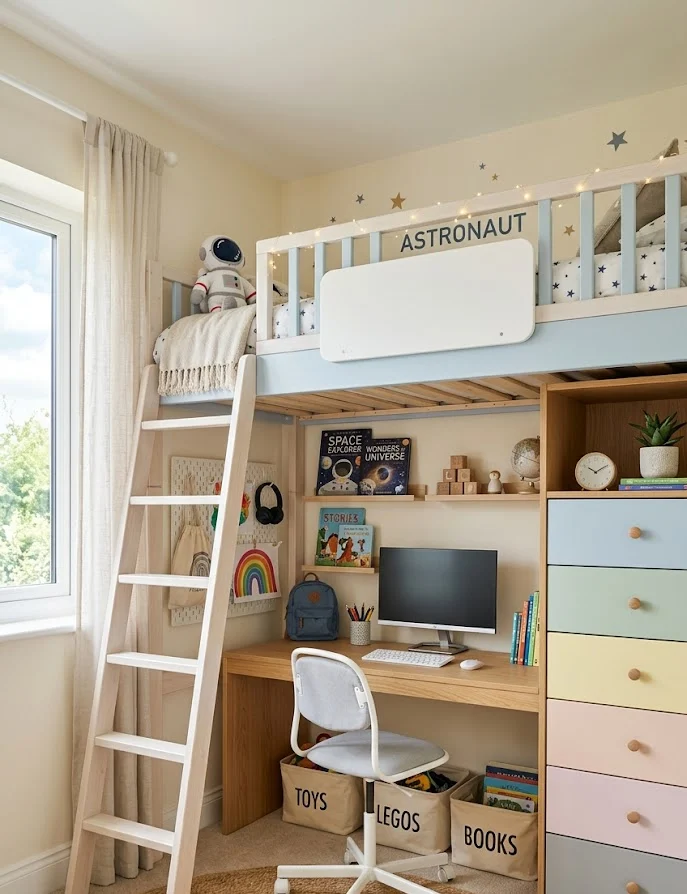
Use vertical storage solutions such as tall bookshelves, wall-mounted cabinets, and floating shelves. Choose beds with drawers underneath, loft beds with study areas below, or foldable furniture that can create more floor space.
Mirrors can also make small rooms appear brighter and larger.
Budget Tips
Avoid expensive renovations by using affordable storage boxes, hanging organizers, compact furniture, and DIY shelves.
Expert Recommendations
Keep the floor as open as possible. Children need space to move and play, so avoid filling every corner with furniture.
Mistakes to Avoid
- Using oversized furniture
- Ignoring storage needs
- Blocking windows
- Too many decorative items
- Poor furniture placement
Maintenance
Regularly remove unused toys, organize storage areas, and keep furniture arrangements flexible as children grow.
Best For
- Apartments
- Small bedrooms
- Urban homes
- Shared rooms
Practical Example
A small bedroom with a loft bed, built-in drawers, wall shelves, compact study desk, and light-colored walls creates a functional space without feeling crowded.
Current Trends
- Loft beds
- Hidden storage
- Foldable furniture
- Vertical organization
- Multifunctional designs
10. Nature-Inspired Kids Room Design
Overview
Nature-inspired kids room design brings the beauty of the outdoors inside by using natural colors, organic materials, plants, and nature-themed decorations. This style creates a peaceful environment where children can feel connected to nature.
From jungle themes to woodland-inspired bedrooms, nature designs encourage curiosity and creativity.
Benefits
- Creates a calming atmosphere
- Encourages connection with nature
- Supports relaxation
- Provides a timeless look
- Works for different age groups
Best Colors
- Forest Green
- Olive
- Earth Brown
- Beige
- Soft Yellow
- Natural White
Best Materials
- Wooden furniture
- Bamboo accessories
- Cotton fabrics
- Natural fiber rugs
- Stone textures
- Eco-friendly paints
Styling Ideas
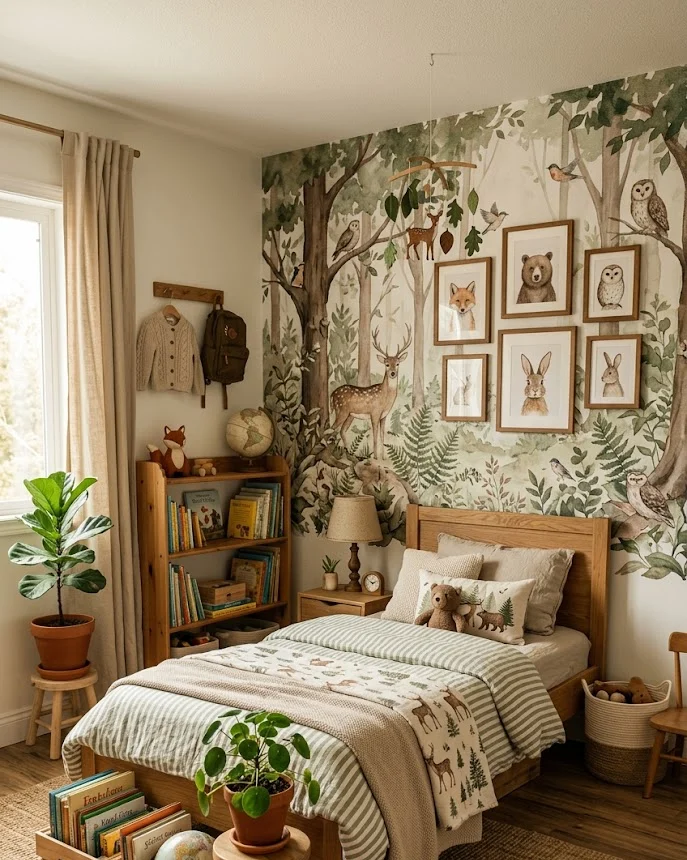
Add botanical wallpaper, animal artwork, wooden toys, indoor plants, nature-inspired bedding, and earthy decorative elements.
A tree-shaped bookshelf or leaf-pattern wall design can become a creative focal point.
Budget Tips
Use affordable nature prints, DIY artwork, simple plants, and wooden accessories to create an outdoor-inspired atmosphere without major expenses.
Expert Recommendations
Choose natural materials whenever possible because they create warmth and improve the overall comfort of the room.
Mistakes to Avoid
- Overusing dark colors
- Adding too many plants
- Choosing difficult-to-maintain materials
- Creating a theme that feels too childish
Maintenance
Clean plants regularly, wash fabric items, and maintain wooden furniture with proper care.
Best For
- Nature-loving children
- Eco-conscious families
- Long-lasting designs
- Relaxing bedrooms
Practical Example
A bedroom with forest wallpaper, wooden furniture, animal artwork, green bedding, and natural textures creates a peaceful woodland-inspired retreat.
Current Trends
- Jungle themes
- Botanical walls
- Sustainable materials
- Nature murals
- Earth-tone interiors
11. Study-Focused Kids Room Design
Overview
A study-focused kids room combines sleeping, learning, and creative activities in one organized environment. A dedicated study area helps children develop good learning habits and creates a comfortable place for homework, reading, and creative projects.
The design should support concentration while still feeling welcoming and enjoyable.
Benefits
- Encourages learning habits
- Improves concentration
- Creates an organized study routine
- Separates play and homework areas
- Supports academic development
Best Colors
- Light Blue
- Soft Green
- White
- Beige
- Gray
- Yellow accents
Best Materials
- Ergonomic desks
- Adjustable chairs
- Wooden shelves
- Cork boards
- Task lighting
- Storage cabinets
Styling Ideas
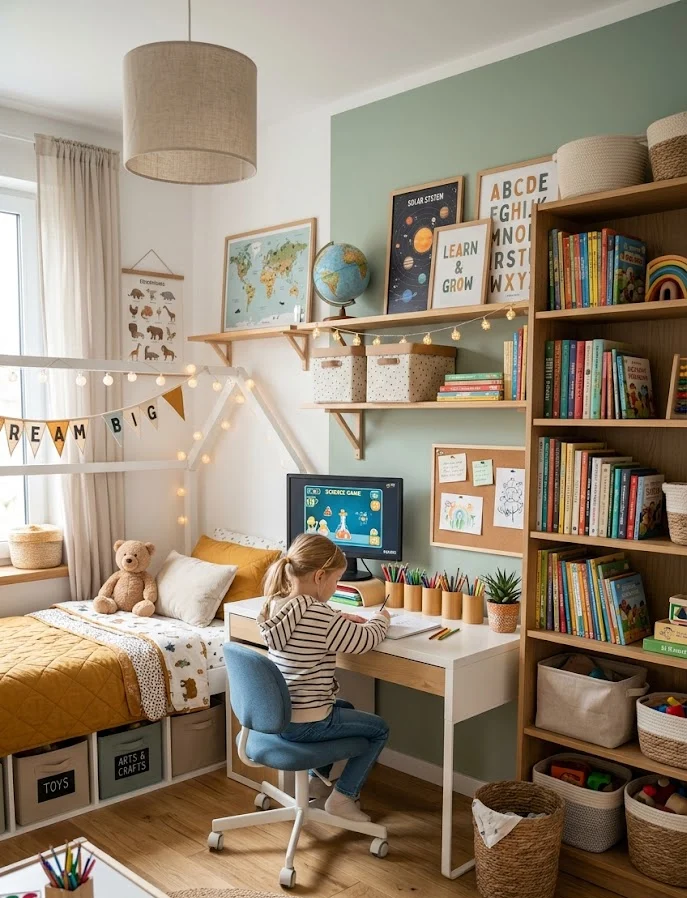
Create a dedicated study corner with a comfortable desk, bookshelf, pinboard, stationery organizer, and proper lighting.
Add educational posters, world maps, science artwork, or motivational quotes to inspire learning.
Budget Tips
A simple desk, comfortable chair, wall shelf, and good lamp can create an effective study area without a large investment.
Expert Recommendations
Proper posture is essential. Choose furniture according to the child’s height and adjust it as they grow.
Mistakes to Avoid
- Poor desk lighting
- Uncomfortable chairs
- Too many distractions
- Lack of storage
- Placing the desk in a noisy area
Maintenance
Keep study materials organized, clean the desk regularly, and update storage solutions as school requirements change.
Best For
- School-age children
- Teenagers
- Students
- Learning-focused families
Practical Example
A child’s room with a wooden study desk, adjustable chair, bookshelf, task lamp, organized stationery storage, and educational wall décor creates a productive learning environment.
Current Trends
- Adjustable furniture
- Smart study desks
- Digital learning corners
- Personalized study walls
- Minimal desk setups
12. Fairy Tale and Fantasy Kids Room Design
Overview
Fantasy-themed kids rooms create magical spaces where children can escape into imaginative worlds. Inspired by fairy tales, castles, enchanted forests, and magical stories, these bedrooms turn everyday life into an adventure.
This style is especially popular among younger children who enjoy storytelling and imaginative play.
Benefits
- Encourages creativity
- Creates a magical atmosphere
- Makes the room unique
- Supports imaginative play
- Creates memorable childhood experiences
Best Colors
- Soft Pink
- Lavender
- Cream
- Gold
- Pastel Blue
- White
Best Materials
- Soft fabrics
- Decorative wood
- Velvet cushions
- Canopy materials
- Fairy lights
- Safe wall decals
Styling Ideas
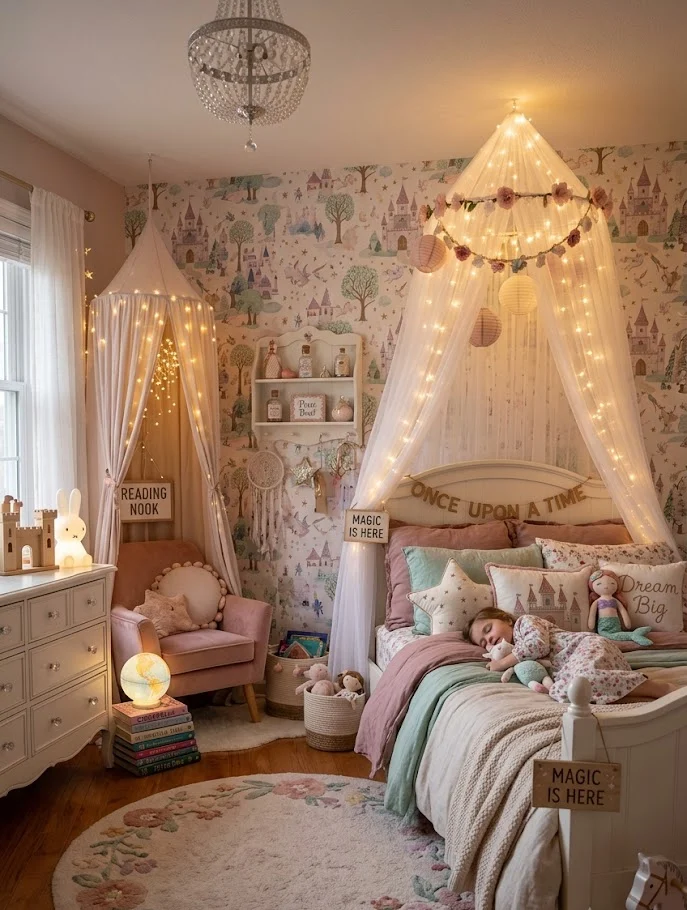
Add canopy beds, fairy lights, castle-inspired furniture, magical murals, star decorations, and cozy reading corners.
A small pretend-play area can make the room even more exciting.
Budget Tips
Use affordable fairy lights, removable wallpapers, themed cushions, and handmade decorations instead of expensive custom furniture.
Expert Recommendations
Keep fantasy elements flexible so they can be updated as children grow older.
Mistakes to Avoid
- Making the room too crowded
- Using fragile decorations
- Choosing uncomfortable furniture
- Creating unsafe play structures
Maintenance
Clean fabric decorations regularly, check lighting accessories, and update themes as children’s interests change.
Best For
- Young children
- Imaginative kids
- Story lovers
- Magical theme enthusiasts
Practical Example
A fairy-tale bedroom with a canopy bed, soft lighting, castle wallpaper, pastel colors, and a cozy reading corner creates a magical environment children love.
Current Trends
- Enchanted forest themes
- Canopy beds
- Fantasy murals
- Magical lighting
- Story-inspired décor
Conclusion
Creating the perfect kids room is about designing a space that supports imagination, comfort, learning, and personal growth. The best kids room design ideas combine beautiful aesthetics with practical solutions that make everyday life easier for both children and parents.
Whether you prefer a minimalist bedroom, an adventurous theme, a Montessori-inspired space, a colorful creative room, or a luxurious design, the most important factor is creating an environment that reflects your child’s personality and needs.
A successful kids room should include comfortable furniture, smart storage, safe materials, proper lighting, and enough open space for children to play and explore. As children grow, their interests and requirements change, so flexible designs with adaptable furniture and removable décor are often the smartest choices.
Start by understanding your child’s lifestyle, favorite activities, and personality. Choose a design style that inspires them while keeping functionality and safety as top priorities. With thoughtful planning, even a simple bedroom can become a beautiful place filled with creativity, learning, and happy memories.